
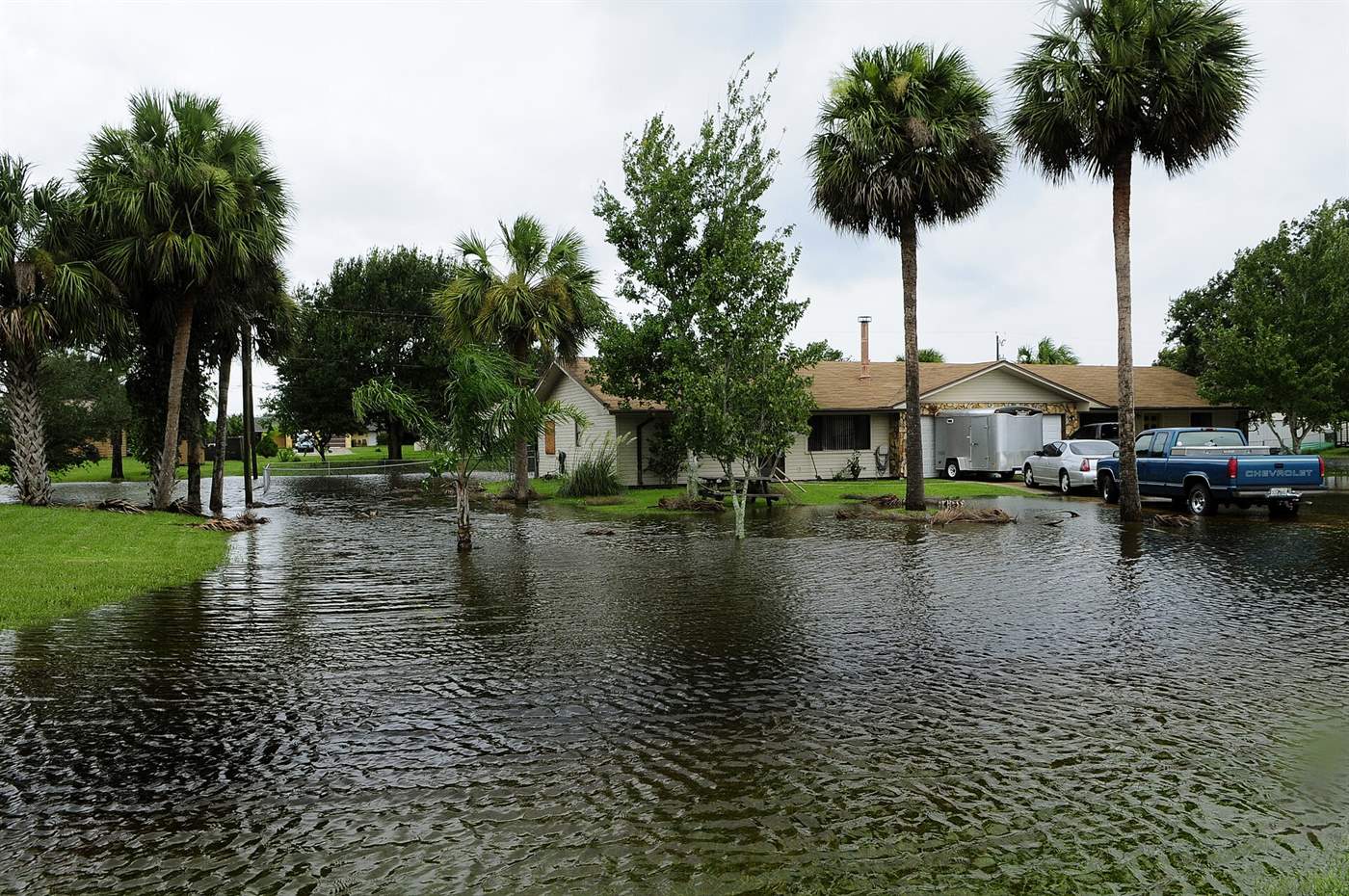
Why North Texas floods the way it does
Dallas–Fort Worth gets most of its heavy rain in short bursts, usually in spring and again in autumn. Thick clay soil takes in water slowly, and a lot of the metro is roofs, roads and parking lots, so a storm that drops several inches in a few hours sends water straight into creeks and street drains. Small creeks that are almost dry most of the year can rise several feet in an hour.
That is why flood calls in DFW tend to come from homes near creeks and low streets, and from houses where the yard slopes toward the slab. Water enters through door thresholds, garage doors, weep holes in brick and sliding doors.
Treat floodwater as contaminated
Restoration standards (the IICRC S500 water damage standard) put water from outside flooding in the most contaminated category, the same as sewage. In practice that means porous materials that were soaked are usually removed rather than dried: carpet and pad, the lower part of the drywall, wet insulation, upholstered furniture and mattresses.
- Keep children and pets out of affected rooms.
- Wear gloves and boots, and wash hands after touching anything wet.
- Do not eat food or use medicine that touched the water.
- Do not run the HVAC system if water reached ductwork or the air handler; have it checked first.
What the cleanup involves
A cleanup crew removes the water and mud, takes out soaked porous materials, cleans and disinfects the hard surfaces that stay (studs, slab, tile), and then dries the structure with air movers and dehumidifiers until moisture readings are back to normal. Expect a "flood cut", where the drywall is cut in a straight line above the water mark.
Rebuilding comes after. Before work starts, ask what will be removed, what will be cleaned and kept, and how the company documents it for insurance.
Flood insurance is a separate policy
Standard Texas homeowners policies usually exclude damage from rising surface water. That is covered by a separate flood policy, most often through the National Flood Insurance Program, and the claim process is different. Water that came through the roof during the storm may be handled under the homeowners policy. Photograph the water line on walls before cleanup, and read our insurance documentation guide.
Common questions
Can carpet be saved after a flood?
Usually not when the water came from outside. Restoration standards treat it as contaminated, and carpet and pad that soaked it up are normally removed.
Should I wait for the adjuster before cleanup?
Document everything first, then start mitigation. Most policies expect you to prevent further damage; ask your insurer how they want it recorded.