
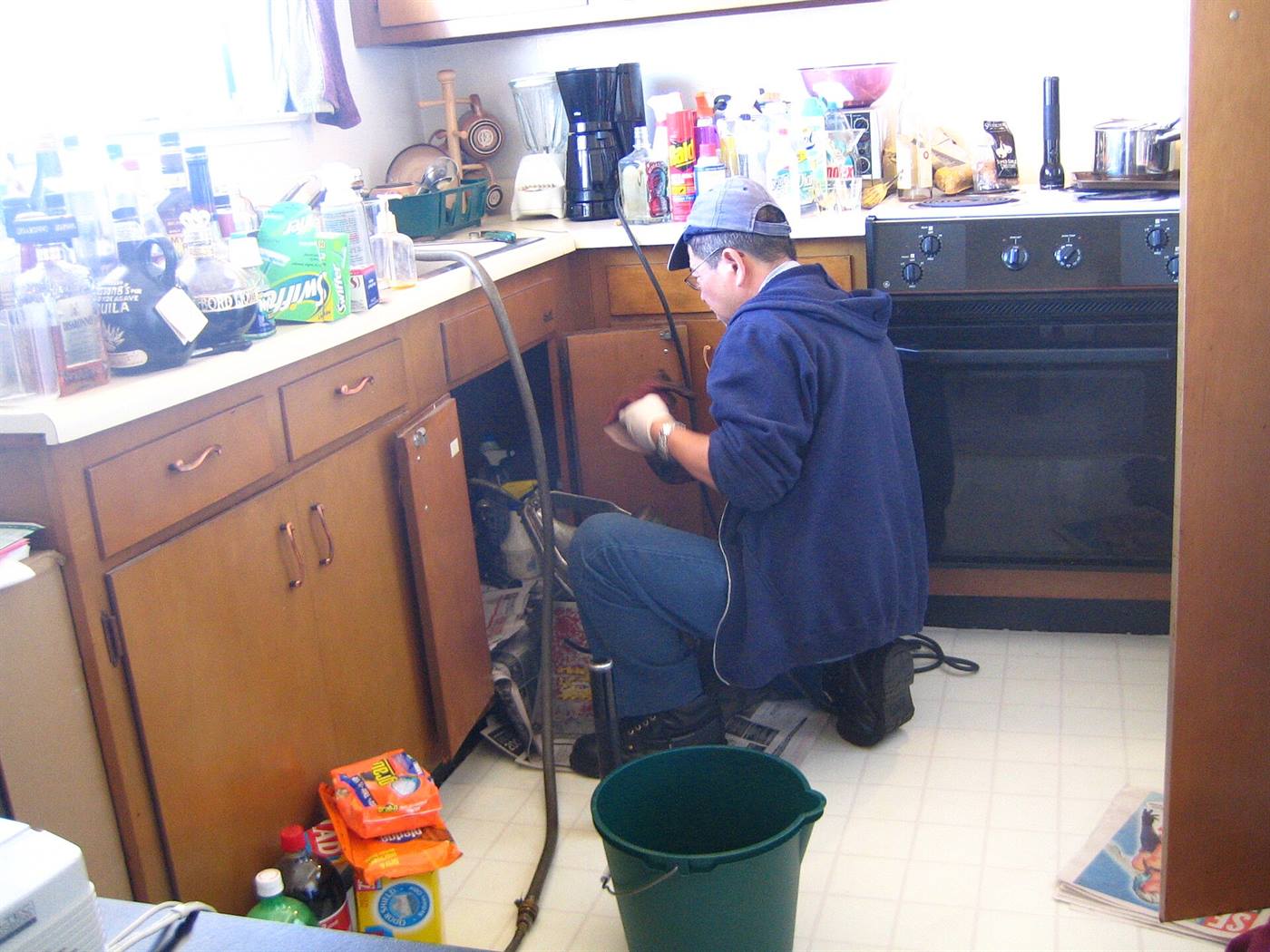
Why sewers back up into homes
The usual causes are a blockage in the line between the house and the city main (roots, grease, wipes, a sagging or broken pipe) and, during heavy rain, a public sewer that is overloaded. Slab homes in DFW have their sewer line under the concrete, so the first sign is often water coming up through the lowest fixture, typically a ground-floor shower or tub.
The city is normally responsible for the main in the street; the homeowner is responsible for the service line from the house to that main. If several neighbours have the same problem at the same time, report it to your city’s water or wastewater department.
Safety steps
- Stop using water in the house: no flushing, showers, dishwasher or washing machine.
- Keep everyone, especially children and pets, out of the affected area.
- Switch off power to the area at the breaker if water is near outlets.
- Open windows if it is safe; do not use a household vacuum or fan on wet sewage.
- Call a plumber to clear the line. Cleanup only makes sense once the backup has stopped.
What sewage cleanup involves
Sewage is Category 3 ("black") water under restoration standards. The crew isolates the area, removes standing waste, and takes out porous materials it touched: carpet and pad, drywall above the wet line, insulation, cabinet toe-kicks and particleboard. Hard surfaces are cleaned and treated with an antimicrobial, and the structure is dried and checked with moisture meters before rebuilding.
Belongings are sorted: hard items can often be cleaned, while soaked soft items such as rugs, bedding and stuffed toys usually go. Ask the company to list what was discarded, with photos, for your insurer.
Insurance and sewage
Many homeowners policies only cover a sewer or drain backup if the policy has a "water backup" endorsement. Check your declarations page or call your agent before you assume it is covered. Keep the plumber’s invoice that names the cause; insurers usually ask for it.
Common questions
Is it safe to stay in the house?
If the backup is limited to one area and that area can be closed off, many families stay. Anyone who is pregnant, very young, elderly or has a weak immune system should keep away from the affected rooms until cleanup is done.
Do you handle needles or trauma scenes?
No. This line is for sewage, drain backups and contaminated water only.